Shetland
Shetland is Scotland's most northerly place, a scatter of islands nearer to Norway than to Edinburgh. It is wilder than Orkney, with huge seabird cliffs, Iron Age brochs and summer nights that never quite get dark.
In short: Shetland is an overnight ferry from Aberdeen or a short flight to Sumburgh. Allow at least four days, more to reach Unst. Visit between May and July for puffins and seabird colonies.
Last updated 12 November 2026.

Places to visit
6 places
- Sumburgh HeadThe easiest place in Shetland to see puffins, on cliffs below a working lighthouse.Allow 1 to 2 hours
- JarlshofLayer upon layer of settlement from the Bronze Age to the 17th century, by Sumburgh.Allow 1 hour to 1 hour 30 minutes
- Mousa BrochThe most complete Iron Age broch tower anywhere, on a small island reached by boat.Allow About 3 hours including the boat
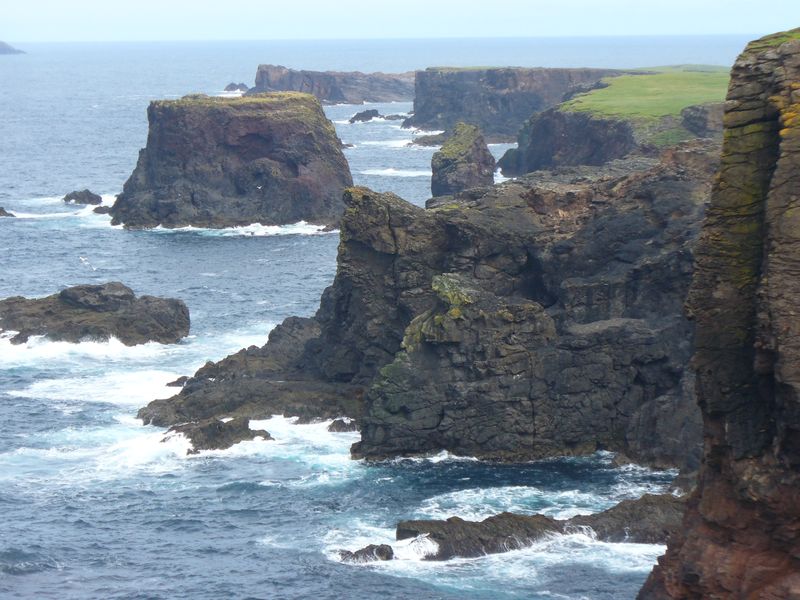 EshanessVolcanic sea cliffs, blowholes and stacks in Shetland's wild north-west.Allow 1 to 2 hours
- Hermaness, UnstThe northernmost reserve in Britain, with gannet cliffs and a view to Muckle Flugga lighthouse.Allow 3 to 4 hours return walk; a full day from Lerwick including two ferries
- St Ninian's IsleA small island joined to Shetland by a curving beach of white sand, with a ruined chapel.Allow 1 to 2 hours
Getting to Shetland
NorthLink runs an overnight ferry from Aberdeen to Lerwick, about 12 to 14 hours depending on whether it calls at Kirkwall. Cabins sell out in summer. Loganair flies to Sumburgh from Edinburgh, Glasgow, Aberdeen and Kirkwall, about 1 hour 30 minutes from Edinburgh or Glasgow.
What to see
Shetland is about 100 miles long and made up of more than a hundred islands, of which around 16 are inhabited. No point is more than three miles from the sea. Shetland Islands Council runs small inter-island ferries to Yell, Unst, Whalsay and others.
- Lerwick, the main town, with a good museum at Hay's Dock.
- Jarlshof, near Sumburgh, a site with layers of settlement from the Bronze Age to the Norse period.
- Sumburgh Head RSPB reserve, where puffins nest by the lighthouse from about late April to early August.
- Mousa Broch, the best-preserved Iron Age broch in Scotland, reached by a seasonal boat. Night trips in summer show storm petrels returning to nest in the walls.
- Eshaness, volcanic sea cliffs and stacks in the north-west.
- St Ninian's Isle, joined to the mainland by a sand tombolo.
- Hermaness on Unst, the northernmost part of the UK, with huge gannet colonies and great skuas.
In June, Shetland has around 19 hours of daylight and a long twilight locals call the "simmer dim". In winter, days are very short, but the northern lights are sometimes seen. Up Helly Aa, Lerwick's fire festival, takes place on the last Tuesday of January.
Allow at least four days for Shetland, more if you want to reach Unst.
Questions
Can I visit Orkney and Shetland on the same trip?
Yes. NorthLink's Aberdeen to Lerwick sailings call at Kirkwall on some days, and Loganair flies between Kirkwall and Sumburgh.
When can I see puffins in Shetland?
Roughly from late April to early August, when they are nesting. Sumburgh Head, near the airport, is the easiest place to see them.
Routes that come here
- Seabirds of Shetland: a four-day birdwatching route Puffins, gannets, skuas and storm petrels, from Sumburgh Head to Hermaness.