Seabirds of Shetland: a four-day birdwatching route
Shetland has some of the largest seabird colonies in Britain, and the birds are easy to reach: puffins nest a few metres from the road at Sumburgh Head. Go between mid-May and mid-July for the fullest cliffs.
In short: Four days in Shetland between mid-May and mid-July cover Sumburgh Head's puffins, Mousa's storm petrels, the Eshaness cliffs and the gannets of Hermaness on Unst.
Last updated 12 November 2026.

At a glance: 4 nights in Lerwick or south Mainland. Fly to Sumburgh or take the overnight ferry from Aberdeen to Lerwick. Book the Mousa boat and the Unst ferries in advance.
- Day 1: South Mainland. Sumburgh Head for puffins, then Jarlshof next door. In the afternoon, St Ninian's Isle for waders and terns on the tombolo.
- Day 2: Mousa. A daytime boat for the broch and seals, or the late-night trip in summer to watch storm petrels return to the broch walls. Rest in the morning if you take the night trip.
- Day 3: Eshaness and Northmavine. About 1 hr 15 min from Lerwick. Clifftop walks for fulmars and seabirds, with the chance of otters along the voes on the way.
- Day 4: Unst and Hermaness. Two ferries north, about 2 hr 30 min each way. Walk out to the gannet cliffs above Muckle Flugga; great skuas nest beside the path.
A long day of about 10 hours.
Elsewhere in Scotland
- Puffins in the west: boat trips from Mull and Iona to Lunga in the Treshnish Isles, May to early August. See Staffa.
- Close to Edinburgh: St Abb's Head, and boats from North Berwick or Anstruther to the Bass Rock and the Isle of May.
- Winter geese: tens of thousands of barnacle geese at Caerlaverock, October to April.
- Forest birds: crested tits and red squirrels around Loch an Eilein in the Cairngorms.
Keep to paths near nesting birds, stay back from cliff edges and never use playback to attract birds.
Places on this route
- Sumburgh HeadThe easiest place in Shetland to see puffins, on cliffs below a working lighthouse.Allow 1 to 2 hours
- JarlshofLayer upon layer of settlement from the Bronze Age to the 17th century, by Sumburgh.Allow 1 hour to 1 hour 30 minutes
- St Ninian's IsleA small island joined to Shetland by a curving beach of white sand, with a ruined chapel.Allow 1 to 2 hours
- Mousa BrochThe most complete Iron Age broch tower anywhere, on a small island reached by boat.Allow About 3 hours including the boat
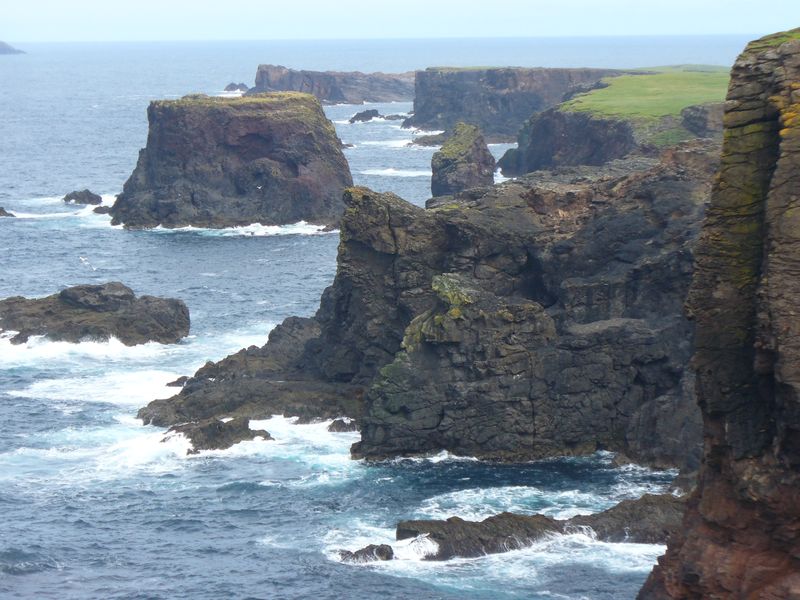 EshanessVolcanic sea cliffs, blowholes and stacks in Shetland's wild north-west.Allow 1 to 2 hours
- Hermaness, UnstThe northernmost reserve in Britain, with gannet cliffs and a view to Muckle Flugga lighthouse.Allow 3 to 4 hours return walk; a full day from Lerwick including two ferries