Harry Potter film locations in Scotland: a three-day route
Almost every Scottish scene in the Harry Potter films was shot within an hour of Fort William. Two nights there cover the real locations at a sensible pace. Edinburgh is where the books were written, not where the films were made.
In short: The Scottish filming locations are around Fort William: Glen Coe, Rannoch Moor, the Glenfinnan Viaduct, Loch Shiel, Loch Eilt and Steall Falls. Two nights in Fort William cover them. Edinburgh has writing connections but no filming locations.
Last updated 20 November 2026.

What was really filmed in Scotland
Most of the Harry Potter films were made at Leavesden studios near London, and the best-known castle exteriors were shot in England. Scotland supplied the big landscapes: the mountains around Hogwarts, the lake, and the railway. The list below is limited to places the official tourist board and the railway operator connect with the films. Where sources disagree, we say so.
| Place | Film connection | What you can see now |
|---|---|---|
| Glenfinnan Viaduct | The Hogwarts Express route; the flying Ford Anglia scene in Chamber of Secrets | The viaduct, from the viewpoint or from a train |
| Loch Shiel | Used as the Hogwarts lake | The view south from Glenfinnan |
| Glen Coe, near the Clachaig Inn | Hagrid's hut in Prisoner of Azkaban | The mountain setting; the hut was a temporary set and nothing remains |
| Rannoch Moor | Death Eaters boarding the train in Deathly Hallows Part 1 | The moor, from the A82 or the West Highland Line |
| Glen Etive | Harry, Ron and Hermione in hiding in Deathly Hallows Part 1 | A dead-end single-track glen off the A82 |
| Steall Falls, Glen Nevis | Landscape in the Triwizard Tournament in Goblet of Fire | The falls, at the end of a rough gorge walk |
| Loch Eilt, Eilean na Moine | Widely reported as the island of Dumbledore's grave, in the Deathly Hallows films | A small wooded island seen from the A830 or the train; no tomb |
Fan guides disagree on which Deathly Hallows film shows the Loch Eilt island, and some say it was digitally moved into another loch in the final cut. What is not in doubt is the island itself, which you pass on the road and the railway between Glenfinnan and Mallaig.
Myth and fact
- "Hogwarts is a Scottish castle." No. Hogwarts was a studio model, with exteriors in the early films shot at castles and cathedrals in England. In the books it is in Scotland, which is a different thing.
- "The Jacobite is the Hogwarts Express." Partly. West Coast Railways, which runs the Jacobite, supplied the engine and carriages for the films. The film engine, Olton Hall, is now on display at the Warner Bros. Studio Tour near London. The Jacobite runs similar carriages on the same line behind other engines.
- "Diagon Alley is Victoria Street." Diagon Alley was a studio set. Victoria Street in Edinburgh is often said to have inspired it. That is a popular story, not something we can confirm.
- "You can visit Hagrid's hut." No. It was built for Prisoner of Azkaban and removed afterwards. The mountains behind it are the reason to go.
- "Dumbledore's tomb is on the island." No. It was a set. There is nothing to see on Eilean na Moine and no access to it.
The route
- Day 1: Glasgow or Edinburgh to Fort William via Rannoch Moor and Glen Coe. From Glasgow, the A82 runs up Loch Lomond and across Rannoch Moor to Glen Coe in about 2 hours 15 minutes without stops; from Edinburgh allow about 3 hours. Stop at the Three Sisters viewpoints on the A82 early in the day, as they fill by mid-morning in summer. The Hagrid's hut location was on the lower slopes near the Clachaig Inn, on the old road through the glen. If you have time and confidence on single-track roads, Glen Etive is a long dead-end road off the A82 near Buachaille Etive Mòr; allow at least 1 hour 30 minutes there and back. Then on to Fort William, about 30 minutes.
Day about 6 to 7 hours from Glasgow, 7 to 8 from Edinburgh, including stops. - Day 2: Glenfinnan, Loch Eilt and Mallaig. If you have a Jacobite ticket, this is your day: two hours each way, with around an hour and a half in Mallaig. If not, drive the A830 Road to the Isles instead. Glenfinnan is about 30 minutes from Fort William. Park early, walk up to the viaduct viewpoint (about ten minutes, steep) and look down Loch Shiel from the monument. If the Jacobite is running, its crossing is the busiest time of day. Continue west about 10 minutes to Loch Eilt; use the lay-bys, not the verge, to look at Eilean na Moine. Then on to the Silver Sands of Morar and Mallaig, about 45 minutes from Glenfinnan. Back to Fort William in about 1 hour 10 minutes.
Day about 3 hours at the wheel. - Day 3: Steall Falls and home. The road up Glen Nevis ends at the Upper Falls car park, about 25 minutes from Fort William, the last part single-track. The gorge path to the meadow below Steall Falls takes about 2 hours return. It is rocky with drops beside it; wear proper shoes. Then back to Glasgow (about 2 hours 45 minutes) or Edinburgh (about 3 hours 15 minutes).
Day about 6 to 7 hours.
Drive times are estimates without stops. In summer, caravans, roadworks and full car parks add time. See our guides to single-track roads and car hire in Scotland.
If you only have two days
Drop Glen Etive and Steall Falls. Drive to Fort William via Glen Coe on day one; on day two do Glenfinnan and Loch Eilt in the morning and drive home in the afternoon. It is a long second day, about 5 hours at the wheel in total from Glenfinnan back to Edinburgh. Three days is more comfortable.
Without a car
This route works by public transport, with some planning.
- The ScotRail train from Glasgow Queen Street to Fort William takes about 3 hours 50 minutes and crosses Rannoch Moor, so you see the Deathly Hallows landscape from the window.
- ScotRail trains from Fort William to Mallaig cross the Glenfinnan Viaduct and pass Loch Eilt all year, about 1 hour 25 minutes end to end. You can get off at Glenfinnan station, about 15 minutes' walk from the viaduct viewpoint.
- Scottish Citylink coaches between Glasgow and Fort William stop in Glen Coe.
- Glen Nevis is the awkward one: check local bus times or take a taxi from Fort William to the Upper Falls car park.
Our Scotland without a car guide has more. If you would rather someone else drove the single-track sections, a private driver-guide is another option.
The Jacobite: ride it or watch it
For most people the steam train is the point of the trip. At the time of writing (November 2026), West Coast Railways has indicated a 2027 season of morning departures from 5 April to 29 October, but its timetable page still says dates, fares and times are "coming soon", and no booking date has been announced. In 2026 the season started late, on 1 June, so do not assume April until tickets are on sale. Book Fort William accommodation you can cancel until you have a seat.
If you cannot get a ticket, take the ScotRail train over the same viaduct, or watch the Jacobite cross from the Glenfinnan viewpoint. Our Jacobite steam train guide covers booking, which side to sit, morning versus afternoon, and parking at Glenfinnan.
In Edinburgh
No Harry Potter film was shot in Edinburgh. The city's connection is with the writing of the books, and much of what is said about it is legend. If you are starting or ending the trip there, these are the places people visit:
- The Elephant House, George IV Bridge. The café calls itself the birthplace of Harry Potter; J.K. Rowling wrote there in the 1990s. It was badly damaged by a fire in August 2021 and reopened over the winter of 2025 to 2026, more than four years later. Rowling also wrote in other cafés, so "birthplace" is the café's claim rather than the whole story.
- Greyfriars Kirkyard. Visitors look for graves with names that resemble characters, Thomas Riddell's above all. The connection is popular but unconfirmed; please keep to paths and treat it as a working graveyard.
- Victoria Street. Curved, colourful and full of shops, and often said to have inspired Diagon Alley. Pleasant either way.
- The Balmoral Hotel. Rowling finished writing the last book there.
For the rest of the city, see our Edinburgh guide.
When to go
For the Jacobite, the season is all that matters; June to August sells out first. For the locations alone, May, June and September give long days and fewer crowds than July and August. Midges are at their worst in still, damp weather from June to August in the glens; see midges and weather and the best time to visit. In winter the A82 and A830 stay open, but daylight is short and Steall can be icy; see winter closures.
Extending the trip
From Mallaig, the CalMac ferry crosses to Armadale on Skye; see our ferries guide and the Skye and the Small Isles page. For a longer Highland loop that includes Glen Coe and Glenfinnan, see the five-day itinerary. All the places on this route are on our Glencoe and Fort William page.
Questions
Where was Harry Potter filmed in Scotland?
Around Fort William: the Glenfinnan Viaduct, Loch Shiel, Loch Eilt, Glen Coe, Glen Etive, Rannoch Moor and Steall Falls in Glen Nevis. Hogwarts castle itself was not filmed in Scotland.
Can you see the Hogwarts Express without a ticket?
Yes. Watch the Jacobite cross the Glenfinnan Viaduct from the viewpoint above the National Trust for Scotland visitor centre, during the train's season. Arrive at least an hour early in summer.
Was any of Harry Potter filmed in Edinburgh?
No. Edinburgh's connection is with the writing of the books, through cafés such as the Elephant House and the Balmoral Hotel, where the last book was finished.
Is the Elephant House open?
Yes. The café on George IV Bridge reopened over the winter of 2025 to 2026, after the 2021 fire. Check its opening hours before you go.
How many days do you need for the Harry Potter locations?
Three days with two nights in Fort William is comfortable. Two days is possible if you skip Glen Etive and Steall Falls.
Sources checked November 2026: VisitScotland: Harry Potter itinerary; West Coast Railways: Hogwarts Express; West Coast Railways: The Jacobite; Jacobite timetables; Larder: Elephant House reopens; ScotRail train times; National Trust for Scotland: Glenfinnan.
Places on this route
- Glen Coe
- Glenfinnan Viaduct and Monument
- The Jacobite steam train
- The Silver Sands of Morar
- Glen Nevis and Steall Falls
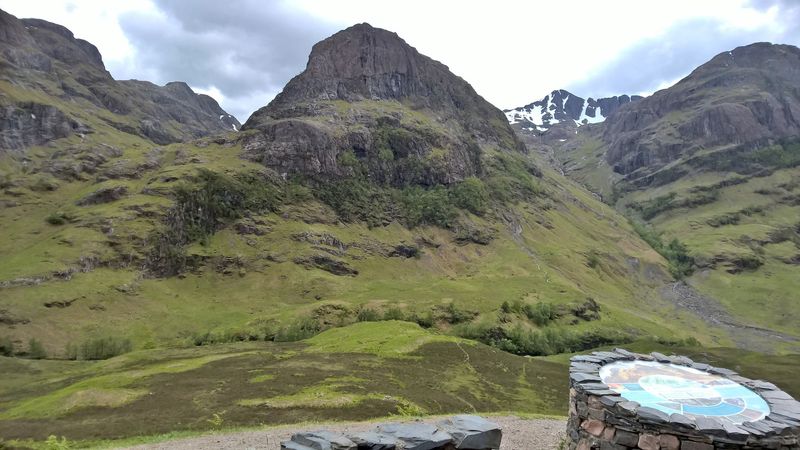 Glen CoeThe most dramatic glen on the main road north, with a free visitor centre, roadside viewpoints and one serious short walk.Allow 2 to 3 hours for the viewpoints and visitor centre; a full day with the Lost Valley walk
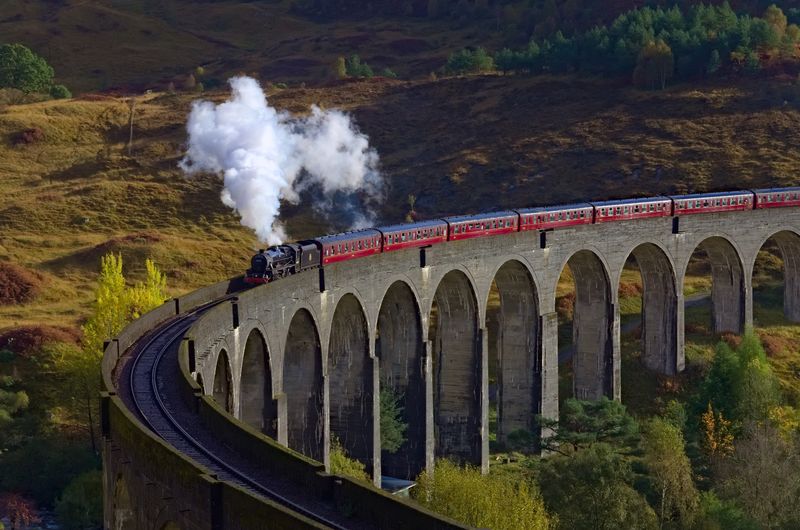 Glenfinnan Viaduct and MonumentThe curved viaduct of the West Highland Line and the monument to the 1745 Jacobite rising, at the head of Loch Shiel.Allow 1 to 2 hours; 2 hours for the 4km circuit
- The Jacobite steam trainThe seasonal steam train from Fort William to Mallaig across the Glenfinnan Viaduct, used as the Hogwarts Express.Allow A full morning or afternoon: about two hours each way, with around an hour and a half in Mallaig
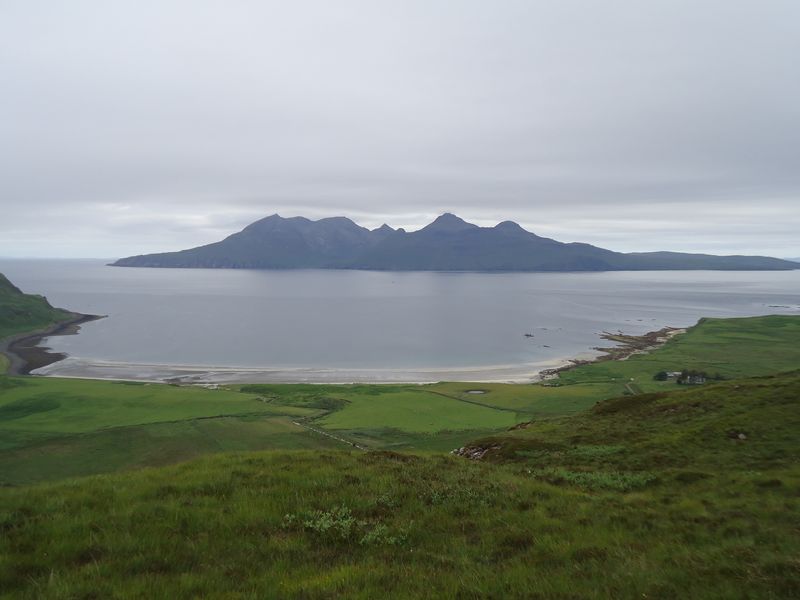 The Silver Sands of MorarWhite sand beaches on the Road to the Isles, looking out to the islands of Eigg and Rum.Allow An hour or two; a whole afternoon in fine weather
- Glen Nevis and Steall FallsA short, rough gorge walk under Ben Nevis to one of Scotland's highest waterfalls.Allow 2 hours return for the gorge walk to the meadow below the falls